SB-M detects declining speech motor control, hypokinetic dysarthria, and phonatory instability with greater precision than standard clinical scales. Paired with SB-C for cognitive tracking, a single brief speech protocol gives Parkinsonian trials, including MSA & PSP, an objective measure of both motor and cognitive function for trial inclusion, enrichment, and longitudinal progression.
The Parkinsonian
Measurement Problem
3–6 months
Standard in-clinic intervals for data collection in PD trials (UPDRS). Daily occurring motor fluctuations and “on/off” medication states are missed.
90%+
of PD patients develop dysarthria over disease course
25–30%
of people with PD have MCI at diagnosis. Motor-only endpoints overlook early cognitive decline, creating risks in adherence and data integrity.
20–30%
Initial misclassification rate between typical PD and atypical syndromes (MSA, PSP)
Motor symptoms like imprecise articulation, reduced vocal loudness, changes in speech tempo, and breathy voice quality are core indicators of Parkinsonian progression. However, they are notoriously subjective to rate, fluctuate continuously, and are poorly captured by intermittent clinic visits alone.
ki:elements extracts acoustic, prosodic, and articulatory features from brief spoken tasks (sustained phonation, /pa-ta-ka/, reading) and returns an objective motor and intelligibility profile providing critical insight into disease progression for all Parkinsonian syndromes.
01
Participant opens Mili
Any smartphone,
any location
Standard smartphone app or webpage. No special microphone, no wearable, no site visit required.
02
Standardized speech tasks administered
~10 minutes
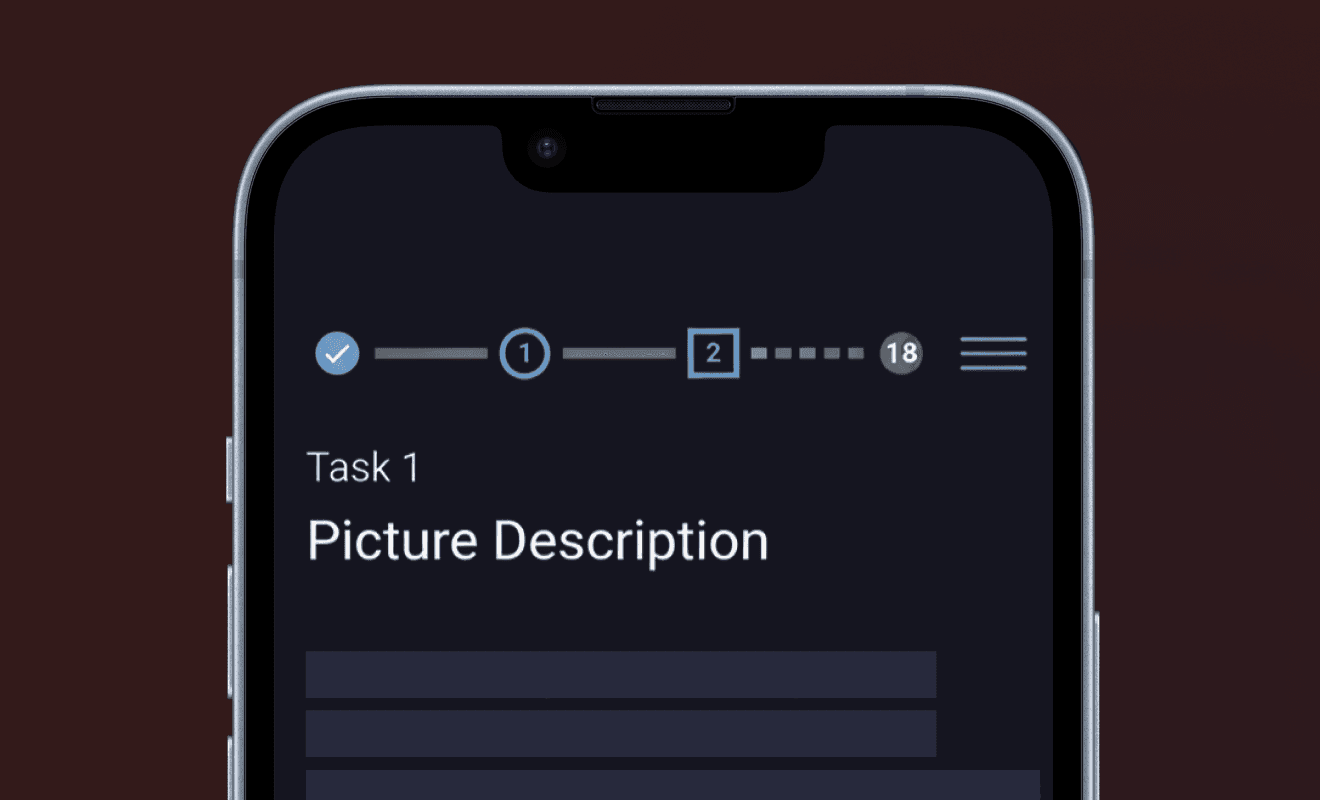
Picture description, text reading, sustained phonation, and diadochokinesis are performed.

03
AI pipeline extracts intelligibility and acoustic features
Automated
The SIGMA pipeline generates the SB-M score alongside intelligibility and articulation subscores & pitch and loudness variability. No manual transcription required.
04
Score delivered via API or Mili dashboard
Same day
Structured output integrates into your EDC, CTMS, or study portal. Full audit trail. Longitudinal trajectory visualisation available for study teams to track disease state and drug response.


Built on rigorous clinical validation
SB-M validation follows the Digital Medicine Society’s V3 Framework, covering verification, analytical validation and clinical validation. A full validation package is available for regulatory submissions.
Validated in German, Czech, and Colombian Spanish typical and atypical PD cohorts. Supports multilingual, multinational clinical trial deployment.
SB-M and SB-C results are anchored to established clinical measures used in PD, PSP, and MSA trials: UPDRS III, PSPRS, UMSARS, SARS as well as MoCA and MMSE.
" transform="translate(1 3)" width="19px"/><path d="M 0 0 L 19 0" fill="transparent" height="1px" id="BpzY28YkB" stroke-dasharray="0" stroke-linecap="round" stroke-linejoin="round" stroke-width="2" stroke="rgba(22, 30, 40, 0.9)" transform="translate(1 8.72)" width="19px"/><path d="M 0 0 L 19 0" fill="transparent" height="1px" id="IBoyu11e2" stroke-dasharray="0" stroke-linecap="round" stroke-linejoin="round" stroke-width="2" stroke="rgba(22, 30, 40, 0.9)" transform="translate(1 14)" width="19px"/></svg>)